1 Comment

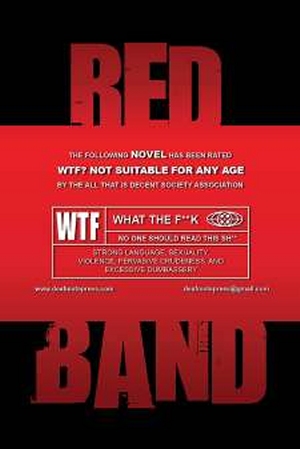
G.O.R.E. Score: Red Band!

Original release date: August 14, 2010
Publisher: Deaf Mute Press

Science fiction, double-feature
Dr X will build a creature
See androids fighting, Brad and Janet
Ann Francis stars in Forbidden Planet
Oh-oh-oh-oh at the late night double-feature picture show
Science Fiction/Double FeatureThe Rocky Horror Picture Show 

Everyone has a memory from their past that sticks with them long after the wonder years and well into adulthood. I have two such memories and both stick out equally in my mind.  Saturday afternoon monster movies…Godzilla, THEM!  and The Monster Squad to name a few. I remember being glued to the television on Saturday afternoon watching and not being able to tear my eyes away. I loved every moment of these movies.  Also, these were movies that my mother was willing to watch with me and being able to share a good family monster movie with my mom was the greatest thing in the world. My other childhood memory involved sneaking down the hall to sit as close to the television as I could with the volume as loud as I dared to watch the late night Creature Features. In the 80’s I was introduced to some of the original creatures, such as The Creature from the Black Lagoon, The Blob, Attack of the Fifty Foot Woman, King Kong (my favorite), and, of course, I eventually met Freddy  and Jason as well. These types of films were everything I was looking for in a movie. Thrilling adventure, exotic far-off locations, cheesy dialogue, and just a bit on the scary side. What was not to love? Add in the fact that I was being a rebel, sneaking out to watch these movies, and it all made for an amazing experience. (Hey, for me it was rebellious, especially when it came to Nightmare on Elm Street and Friday the 13th) These wonderful movies with giant monsters that destroyed entire cities, insects larger than your imagination could even fathom, adventures to distant fantasy lands, and poor “innocent” campers being slaughtered for no apparent reason helped make me into the movie and book lover that I am today.

Now, you may be wondering why I’m taking you down memory lane in regards to movies, especially since this is a book review. Well, let me get to the reason for my little voyage into my past. The book I being reviewed here, “Red Band!” by Jay Franklin, is written as if it were a B-Movie, complete with cheesy dialogue, highly inappropriate innuendos, non-pc stereotypes/statements, and lots of crazy creatures. Just to be clear, “Red Band!” is, seriously, meant to be bad. The author gives four rules in the introduction; Rule #1 states: This is not to be taken seriously nor is it anything to be considered literature. This was written as a B-Movie in mind. This is my Plan 9 from Outer Space.

The story opens with our hero Sergio attempting to coerce his girl, Darla, into some, shall we say, adult play. A deal is made that he will take Darla to the Texas State fair in exchange for said playtime. Enter stage left Dr. Rib! The self-proclaimed Rib King is determined to take claim of the title “World’s Hottest Chili Sauce,” a title which currently belongs to the French and he will do anything to get this label. What follows in “Red Band!” is an entertaining tale of genetically-altered chili sauce, zombies, beer, and a group of “survivors” that occasionally makes you root for the zombies.

Prepare yourselves to journey through to another state (unless you happen to live in Texas) to a fair where you not only take in the sights and sounds, but the scents of the Chili cook off. A journey to a wondrous land of beer and carnival rides. That’s the signpost up ahead – your next stop, the G.O.R.E. Score…

G: General Entertainment – I cannot tell a lie: Franklin’s story thoroughly entertained me. I laughed and rolled my eyes quite a bit at the silliness that was happening on the page. I’m not one to get easily offended, especially when I know that certain statements/phrases are jokes and only meant to be viewed as such. Yes, there was some politically incorrect lingo being tossed around in “Red Band!,” but taken in the context of fun, it was great. The characters, while amusing and annoying at the same time, were not overly developed, but with an introduction telling me that this book is the author’s Plan 9 from Outer Space I didn’t really expect a lot of time to be spent explaining the finer details of the characters and what their motivations were. Franklin used the dialogue between the characters to give tell me all I needed to know…it was darn near perfect. 9/10

O: Original Content – I have to, again, give it up to the author for originality in this book.  Yes, the concept has been done…in the movies. I’ve never read a book that was intentionally written in the same vein of a B-Movie. Even the cause of the zombie-ism was unique to this reader. Can you tell me another book where genetically engineered habañeros aid in creating a zombie epidemic? 9/10

R: Realism – This is a difficult area to rate “Red Band!” because, quite frankly, it’s not realistic at all. However, looking at the authors attempt at making his book an homage to the B-Movie horror films of the past, he did well. The setting is simple. Events primarily took place within the fairgrounds with occasional scenes taking place in the lab where the habañeros were tested upon. The creatures are menacing and “acting” was completely over the top. That’s what we look for in those old campy movies from back in the day, right?  8/10

E: Effects/Editing – I was not able to get my hands on a physical copy of “Red Band!,” therefore  I am unable to give input in regards to its physical construct. I was given a PDF of the book to read on my Kindle, and while Kindles are able to work with PDF files they do not always format properly. I actually had a pretty difficult time reading the book as the font was tiny and could not be adjusted. Minimal spelling/typographical errors were noted. I will refrain from commenting on any grammatical errors; due to the type of book this is, I am going to assume most errors in grammar were intentional. 6/10

TOTAL SCORE: 8/10
VERDICT: SWEET

“Red Band!” is a book for fans of creature features, B-Movies and those who enjoy being entertained purely for the sake of entertainment. If that is you, then give Franklin’s world a try and see what you think.

All right, you primitive screw-heads, listen up! See that? That…is The G.O.R.E. Score!

4 Comments

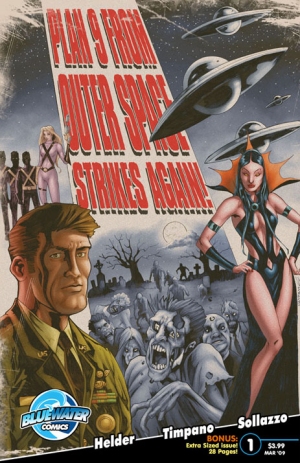
G.O.R.E. Score: Plan 9 from Outer Space Strikes Again!

Original Release Date: March 2009
Number of Issues: 1 (one-shot)
Publisher: Bluewater Comics

Let the bitch session begin.

Those of you who know me are aware that I am an unofficial expert on Plan 9 from Outer Space.  I have a copy of Ed Wood’s original script, which I am using as the basis for my in-progress novelization of the original film, and have also reviewed the movie for The G.O.R.E. Score (available here).  I am an Associate Producer of the Plan 9 remake from director John Johnson and Darkstone Entertainment that filmed earlier this year, and I was also able to visit the set for a weekend in May 2010 and actually got to be in the movie as the “Ed Wood Tribute Zombie,” a pink-wearing, cross-dressing member of the undead horde.

So it is always with a certain sense of appreciative apprehension that I approach the discovery of new Plan 9-related projects.  While I love the fact that Wood’s 1959 so-bad-it’s-good film can still garner interest from fans and creators alike, the movie’s public-domain status means that literally anyone can put out anything with the Plan 9 name on it, regardless of how much or how little they truly care about the integrity of the world created by Wood in his film.  Let’s face it: some folks are just out to make a quick buck, and nothing says “easy money” like slapping the name of a well-recognized project on a steaming pile of crap that took no time, talent, or effort to create.

I’m sad to report that this is the case with Bluewater Comics’ 2009 one-shot graphic novel “Plan 9 from Outer Space Strikes Again!”  I picked this book up because I had hopes that someone on the project actually cared about (or may have at least seen) the original film, but I can tell you pretty definitively that’s’ not true.  The “plot” (and I use that term VERY loosely) of this book is as follows: purportedly taking place in the universe established by the film and set 50 years after those events, the aliens return… for some reason.  Haphazard, extremely localized mayhem ensues – and not the fun, entertaining kind of mayhem, the random kind that doesn’t really make sense to anyone reading this story.  Oh, and there are some random zombies in there too.  So, yeah, that’s about it for the plot synopsis of this one.

Here is a brief list of the most terrible things about this book.  If you have any desire to read this comic, you’ll want to skip this part and go directly to the Score; also, you’ll want to have your head checked by a professional of some type.

<<SPOILERS HO!>>

  • The inside front cover states: “In respect for the film PLAN 9 FROM OUTER SPACE, we have tried to make ED WOOD proud.  In the original film you will notice a bunch of mistakes such as seeing a boom Mic in some of the shots.  We have made some mistakes in this comic.  Think of it as an interactive comic book!”  Um, no, I’ll think of it as an excuse to be cheap and careless.  It’s one thing to make a story that’s intentionally bad so that it’s funny and entertaining as a result, but this story is neither funny nor entertaining, it’s… just… bad.
  • Page one starts with an introduction from The Amazing Criswell, and I can appreciate the attempt at the tie-in to the movie here… except Criswell says “Fifty years ago, the unspeakable occurred.”  Well, for one thing, it’s not unspeakable, because Criswell talks about it at length as he narrates the entire original movie.  For another thing: on this page, they drew Criswell EXACTLY as he looked in the original film that took place “fifty years ago;” is he immortal?
  • Also on the first page (geez, we’re still on the first page of this thing?), a woman comes home as she sees a group of children walking up to her door to trick-or-treat – this story takes place on Halloween, I’m assuming.  Anywho, she puts on a slutty Vampira-esque costume and proceeds to shove her barely-covered breasts right in the kids’ faces as she answers the door.  Classy.
  • In the very next panel, with no exposition whatsoever, we see the fully-intact and rather alive-looking Inspector Daniel Clay (played by Tor Johnson in the original film) pop out of his grave.  Not only has he not decomposed at all in the last 50 years, he was also turned into a bare-bones skeleton at the end of the original Plan 9, but neither of these facts seem to bother the editor of this book too much.
  • A prototypical nerd and his mother somehow have the fully-working version of both a communication device and the original “decomposer ray” from Eros’ alien spaceship; only problem with this is, that spaceship blew up and was shown to utterly disintegrate at the end of the original movie.  Sigh.
  • On the next page, a random military scientist in some top-secret installation somewhere is working hard on a Solaronite bomb (while watching the original Plan 9 film on two different TVs in the lab – isn’t this story supposed to be set in that world, though?).  Addressing the aliens rhetorically, he says “This time it will be you, followers of Eros, who will pay attention!”  The aliens were definitely not followers of Eros; Eros was simply a commander of one of their starships, and he died at the end of the film so he couldn’t have been that great of a commander.

<<END SPOILERS>>

I could literally go on and on with the mistakes; the ones I noted above all happened in the first four pages of the book.  I’ll spare you the drivel from the remaining 27 pages; just know that they are all as bad, if not more so, than what I’ve already detailed to you.

Quite frankly, I want to be done with this book forever, so let’s get to the Score so I can stop talking about it:

G: General Entertainment – If you couldn’t figure it out by my rhetoric above, this book offers very little in the way of entertainment value to anyone.  Plan 9 fans may take some slight pleasure in seeing some of the characters and situations from the original movie used, but anyone who isn’t intimately familiar with Wood’s film is just going to be utterly lost. 1/10

O: Original Content – There is absolutely nothing positive to be had in this category.  It’s as if some intern for Bluewater watched the movie and wrote down a list of “notable” concepts and commonly-used words from the original story, then the writers of this book (who shall remain nameless because I’m trying really really hard to be nice) were forced to create this story around those pieces, like some terribly-backwards version of a Mad Libs.  It’s Ed Wood regurgitation, and we all know how awesome puke looks.  0/10

R: Realism – As noted in minute detail in the Spoiler section above, nothing makes sense, both in the individual scenes via the actions of the characters and in grand scheme of the story on the whole.  There just not much else to say here, really; nothing makes sense, nothing is realistic, and it all sucks. 0/10

E: Effects and Editing –I will award a few points here because the artwork is above-average, and penciller Giovanni Timpano should get some credit for that, even if he was forced to draw some terrible, terrible things (why did the nerdy middle-aged man have to stick his face right into the bosom of his extreme-wrestler mother, REALLY?).  He definitely didn’t have much by way of actual story to work with, and no amount of editing could have done anything to help this book.  To add insult to injury, the cover features multiple characters and situations that never appear in the book, adding to the feel that Bluewater was really just out to dupe consumers into buying their junk. 3/10

TOTAL SCORE: 1/10
VERDICT: BOO

There is absolutely nothing of actual entertainment value here.  Being a hard-core Plan 9 fan is the only thing that’s stopping me from throwing this book in the trashcan right now; I’ll keep it in my collection, but I’ll never read it again, and I’d advise you to steer well clear of it as well.

And now, my friends, you know the Score!

3 Comments

G.O.R.E. Score: Lazarus

Original Release Date: September 4, 2010
Publisher: Twisted Library Press

It seems as though most zombie tales — whether it be movies or books or even video games — takes place in either present day, some version of the future, or at some point in the 20th century. Thankfully, within the past few years that has changed, with the appearance of such novels as the “Pride and Prejudice and Zombies” series setting Jane Austen’s 19th century England on its decaying gore-soaked ears. Even so, one time period has always felt off limits in the written world: the Old West. Maybe it has something to do with the romanticism of the grizzled cowboy riding off into the sunset on his trusty horse leaving the woman he loves behind, or with the ideas of life in those days as set by authors such as Larry McMurtry or Zane Grey. But with the influx of zombies into popular culture, specifically movies like The Quick and the Undead and Undead or Alive, along with video games like Red Dead Redemption: Undead Nightmare, the undead have finally been allowed to roam the deserts and mountains of the Old West, and author Lori Titus uses that setting at the backdrop for her debut novel, “Lazarus.”

Luella Pembry steps down from a train in Lazarus, California, in the late 1890s. Based on the research of her late husband Marcus, she knows that this small town is soon to become the epicenter of a Rising – an awakening of the undead. She has the ability to help prevent it, but needs to convince town sheriff Benjamin Drake and mayor Jasper Cole that the threat is real. Unbeknownst to Drake, the mayor is keenly aware of the “problem”, and Luella’s arrival threatens Cole’s work on trying to control the undead through his own means. Can Luella and the sheriff put a stop to Cole’s plans before the entire town of Lazarus is overrun with the undead?

Let’s run this tale of zombies in the Old West through the Score to see what happens….

G: General Entertainment – Something I enjoy most about reading is the act of discovery. “Lazarus” tells an interesting tale, but too much is revealed too soon and with little prompting. For example, within a few early pages of the book, Luella spills everything about her dealings with the dead and why she’s in Lazarus without putting up a fuss. Gradually learning her history and her reasons for being in Lazarus would add much to the telling of the tale. But what makes up for that is the concept that Titus presents about the zombies themselves. 5/10

O: Original Content – The story broaches the idea that zombies occur naturally and have for hundreds of years. By examining the folklore and legends of different countries, patterns begin to emerge, and outbreaks of the undead – called Risings – can be localized to specific areas of the globe where “magnetic disturbances” in the Earth are the greatest. Even more intriguing is how people dabbling in magic may be able to control the undead to make the shambling monsters do their bidding – a nice throwback to the zombies of voodoo. Another singular idea is that the undead don’t actually realize that they are dead, and by giving them regular food or drink, they will return to the grave on their own. To me, that’s so out-of-the-box when it comes to zombies that I wanted to see it played out with the characters rather than as a passing anecdote. 8/10

R: Realism – The romance between Luella and Drake – two people who just met – is almost instantaneous, and I found myself questioning it throughout the story. In addition, most of the characters feel flat, speaking with almost the same monotone presentation throughout. The three main characters, however, manage to pick up the slack and create a tense triangle that carries throughout the story. 4/10

E: Effects and Editing – Interaction with zombies does not occur until more than halfway through the story, which works well for “Lazarus” as the tension slowly mounts while the reader wonders just what the zombies are going to do. Their first appearance “in the flesh,” so to speak, provides a gory image of the undead, one with “her eye sockets weeping with gore” (just what you’d want in a zombie, really). The addition of the helpful ghosts and magic into the fold also provides a nice touch, especially in scenes involving the villain. 7/10

TOTAL SCORE: 6/10
VERDICT: A’IGHT

“Lazarus” offers a solid tale of zombie mayhem mixed with a little bit of magic and of the supernatural. Parts of the story could use a bit of fleshing out, pardon the pun, allowing the reader to slowly uncover the backstories rather than throwing all the cards on the table so early. However, the idea of naturally-occurring zombies rather than by a manmade means makes this a tale worth reading. A good first effort from Lori Titus and a welcome entry into the zombie world.

And now you know the Score!

REVIEWED BY: Greg Carter

1 Comment

G.O.R.E. Score: Bong of the Dead

Original Release Date: not yet publically available
Run Time: 91 minutes

Oh, Canada.

I will forever be indebted to you, my great Neighbor to the North, for giving the world William Shatner, one of my all-time heroes.  However, you also spawned Celine Dion, so I may have to detract a few points from you for that one.

I need something from you, Canada.  The novelty of Terrance and Phillip from “South Park,” while hilarious, has long since faded for me (even though I did dress as half the duo for Halloween in college one year), and Bryan Adams compounds the whole “too many terrible singers from the Maple Leaf Land” thing.  Let’s face it: Shatner, as awesome as he is, is no dulcet-toned songbird.

So here is your shot at redemption, Realm of the Mounties: an independent zombie movie from Canadian filmmaker Thomas Newman, shot on the most shoestring of budgets and with a really, really interesting title: Bong of the Dead.

Yes, you read that last bit correctly: here we are in the “Golden Age” of zombie mash-ups, and Newman has managed to combine two elements I haven’t seen used in tandem much at all, the reanimated and the reefer.  In this tawdry tale of tokin’ terror, a fairly-standard zombie epidemic has struck the land, and the government has managed to create “Danger Zones” where the still-active undead are supposed to be contained, although this story finds more than one member of the walking dead out and about in the cities and countryside.  Two stoners accidentally discover that a ground-up zombie brain is the perfect fertilizer for the growth of über-strong weed, so naturally their priority quickly becomes setting out to find more undead to use for their hash heaven.  Along the way, they meet a pretty girl (surprise, surprise) and a zombie with the ability to think, so as you might guess: mayhem ensues.

Let’s doobie-doobie-do our way into the Score:

G: General Entertainment – I watched this film while stone-cold sober, and I have to admit, I still laughed a good amount.  Credit Newman (who wrote the movie as well as directed it) for not taking himself or his characters too seriously; from the get-go of the kitschy-yet-awesome opening credits, the tone of Bong is set with its tongue firmly planted in its cheek.  The cast and crew mostly seem to feel this vibe as well; they realize that they may not exactly be making a film for Oscar consideration, but that doesn’t mean they can’t get down and have some fun with it. 7/10

O: Original Content – As I mentioned, the genesis of the zombies in this story is a fairly standard one, and much of the background details are actually pretty minimalized to the point where they are not even discussed.  The “meteor as the cause of the plague” approach has been done many times over, but Newman still manages to infuse it with his own singular branding.  At times, it feels that Bong is borrowing story-telling and presentation elements directly from other zombie movies like Slither, Dead Alive, Resident Evil, and others, but credit still needs to be given for this tale’s distinctive approach of Reefer Madness meets Dawn of the Dead. 5/10

R: Realism – I’ve written 150-plus G.O.R.E. Score reviews, and every time I come to the “R” section, I still give pause to what constitutes “realism” in a story about the undead.  Ultimately, it’s about how characters react and situations present themselves within the context established by the story’s narrative.  Are there situations in Bong that make no sense, like the slow-motion reveal of the two stoners and the token hot chick coming out of the farm shack touting insanely-large weapons and dressed all in black leather when there was no hint of these items to be found earlier in the story?  Definitely.  Do the characters in this film make dumb decision after dumb decision and act like idiots in general?  Absolutely.  The former is an example of exaggerated story-telling that may not sit well with “film purists,” but the latter makes perfect sense by virtue of taking place in a story about potheads and yokels who don’t listen to the government and aren’t the brightest bulbs in the pack to begin with.  So, we’ll split the difference on the numbers here. 5/10

E: Effects and Editing – Almost every review you’ll read about this movie will inform you that Newman shot the entire film in 15 days and had a total budget of only around $5,000.  I guess I’ve just told you that, too; while the accuracy of these numbers shouldn’t be questioned, as Newman himself pointed them out to me with pride during our recent communications, what is important to focus on is that the film looks great from start to finish, and it was clearly constructed by someone who has a love and appreciation for the horror and comedy genres.  I’m not sure if more money was added to the initial budget for post-production, but the vast majority of the film has some sort of composite effect in most shots, whether it’s passable-looking CGI zombie carnage or other visual tweaks that really do help give this movie a feel that is all its own.  The zombie-related physical appearance and gore are, in a word, amazing; gorehounds should be happy to view this film from this standpoint alone.  The audio is a bit odd; apparently the entire movie, from dialogue to sound effects, was re-dubbed in post-production.  Whether this was due to the loss of the original soundtrack or for some other reason is unknown to me.  While it is a bit off-putting at first, once you settle in it just becomes second nature to the tone of the film, and wasn’t that big of an issue for me personally.  Overall, the film looked pretty good (especially in the physical-effects department) and didn’t run too long, which makes it a winner for me in this department. 8/10

TOTAL SCORE: 6.25/10
VERDICT: A’IGHT

Sadly, the movie is not yet available for sale; it is currently making the rounds at film festivals and will hopefully be out on DVD for public consumption sometime soon.  Bong of the Dead is definitely not for everyone, but if you’re in the mood for a goofy zombie movie that looks good and you won’t have to think too much about, you should definitely bake up a fresh batch of “special brownies” and check this one out when you can.

And now, my friends, you know the Score!

1 Comment

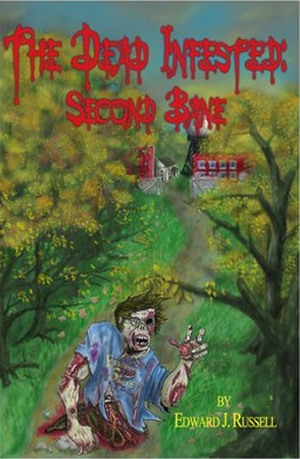
G.O.R.E. Score: The Dead Infested: Second Bane

Original Release Date: February 3, 2011
Publisher: Independently by the author via Createspace

Zombies have not been around the literary world as long as vampires and various other vicious creatures of the night…and day. This lack of saturation over the years has allowed authors the opportunity to get creative and change things up a bit, to break the mold while still staying true to what many have come to love about the undead flesh-eaters. Even the subtlest of changes can make a huge difference in the dynamic of the story. For me, a fast zombie is MUCH more threatening in theory than a slow shamble, because I personally don’t have the physical ability to do what needs to be done….to RUN! On the flip side, you have a horde of slow movers coming your way, cornering you and you run out of ammo. What do you do then? Either way, the outcome of the situation is bleak.

Edward J. Russell, the author of the novel I am introducing you to today, “The Dead Infested: Second Bane,” takes the zombie and adds his own touch to the genre. The undead are still the ghouls that many have come to view as unholy visions of humanity. But Russell has made some slight changes that, I think, bring about a bit more depth into the “character” of the zombie.

Imagine, if you will, a world where the dead have risen and roam the lands in search of sustenance in the form of human flesh. A world where civilization has essentially come to an end except for a few staggered groups struggling to survive. Where not only do these survivors strive to avoid becoming the next “Happy Meal with legs,” but also have to defend their sanctuary from other humans hell-bent on taking what they have risked their lives to procure.

This is the world in which Ward (Warden) Wilson now lives. The people, who look to Wilson as their leader, have been given a chance at a return to a fairly normal life while living inside an aquaculture compound. However, this return to normalcy is threatened when a stranger, Reed, joins their group; there is an immediate personality clash between he and the Warden. Add to this distress the ever present threat of a nearby faction of survivors led by Dante, attempting to procure their next meal or shelter by taking what they want from those who already have it, rather than foraging for their own supplies. Oh and did you forget about the hordes of wandering zombies?

Now let’s take some time to “infest” the Score:

G: General Entertainment – Russell’s narrative in this book does not have what I would call a unique storyline; however, there are elements that are quite intriguing and brought about an interesting twist to the ending. The characters are expanded upon very well and written in such a way that you actually get surprised when certain people are not who they initially seemed to be. I mention the character development in particular, as I have noticed that some first-time authors can lack the flourish of a well thought out character. 8/10

O: Original Content – The compound, an aquaculture (also known as an aqua-farm), was an inspiring and great location to use to build a community of survivors; a natural self-contained community to begin with, all it really needed was some fortification. Just be careful as to how much is eaten and make sure to not kill the female animals with eggs, and an indefinite fresh food supply is readily available. As mentioned above, Russell’s novel can be very formulaic at times and that can get a bit old after a spell. However, the author added some elements to his tale, specifically regarding the undead, that were quite engrossing and were something that I had not as of yet read in a zombie novel. I hesitate to say much more as I do not want to ruin any aspect of this book. 7/10

RR: Realism – This is the area, I believe, where Russell shows his some of his strongest work. Being a former military man, he is familiar with military ranking structure, vehicles, lingo, and the weaponry used. However, he does not force the technical aspect of any of this down your throat; it’s not “gun porn,” as some would say. Russell is also highly effective in creating realistic action sequences. The characters react in ways that are consistent with their personalities. While the events and actions happening in the world of the “Dead Infested” are fantastical (duh, it’s a story about zombies), they are still believable. The actions chosen by the survivors are that which real people would likely choose in order to survive. Mistakes are made, lives are lost and saved, and the groups are forced to move on quickly no matter what the result of their actions. 8/10

E: Effects & Editing – I was able to get my hands on both a physical copy and a Kindle copy of “The Dead Infested: Second Bane”. The book itself is well put together with solid binding and an illustrated front cover with the title written in a font that gives the appearance of dripping blood. The back of the book has an image relevant to the story along with the book summary. While not overly lengthy, coming in at only 218 pages, Russell’s prose allows for a quick and satisfactory read with minimal spelling or grammatical errors. The Kindle edition had no formatting issues that I noticed and, again, limited spelling and grammar issues were apparent. 7/10

TOTAL SCORE: 7.5/10
VERDICT: SWEET

Whether a die-hard zombie fan or just an occasional reader of the genre, “The Dead Infested: Second Bane” is well worth checking out. There is plenty of original content and exciting action sequences that make it easy to stay hooked into the story and not feel like you’re reading the same ol’ zombie novel. So, take charge of your survival, avoid becoming that tasty walking “Happy Meal” and pick up some tips from “The Dead Infested: Second Bane”.

–Reviewed by: Heather Faville

Leave a comment

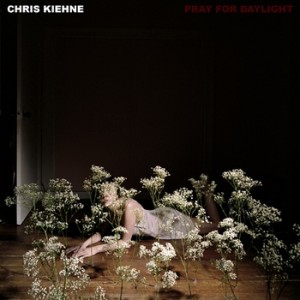
G.O.R.E. Score: Pray for Daylight

Original Release Date: September 25, 2010
Total Track Time: 32 minutes

Music can add an element to story-telling that is, in my humble opinion, difficult to match.  For so many people, music is an emotional or significant part of their lives; as an example, I have many professional writing acquaintances who simply cannot write effectively without music playing in the background.  It might have to be a certain genre or even a certain group or artist, but I’ve been a part of many discussions where writers have emphatically detailed the necessity of music as a key piece of helping to put them in the correct mindset to effectively create their written pieces.

The same can be said for many other types of people and professions.  Whether you’re a semi-truck driver or just a car owner, anyone who’s had to drive a sizable distance or has been stuck in traffic for any length of time knows how important it is to have music playing to help keep their sanity (and their alertness) intact.  Many dancers (both the professional-stage
version and the more, ahem, adult version) need a specific kind or type of music to help emotionally propel them into giving their best performance.  I’ve known people that literally cannot fall asleep without some type of music playing in the background.  Anyone who has been to a professional sports event or a wedding knows first-hand that even having music playing in the background is an integral piece to creating an overall event experience.  The list goes on and on.

As a professional DJ for the last decade-plus, I know the importance of music all too well.  That’s why I’m always a little leery to review a musical project here on The G.O.R.E. Score; to date, I have reviewed two different albums (Luke Kuzava’s ten-track alt-rock opera “Zombies Can’t Dance” and Aaron Stoquert’s five-track zombie-centric EP “Run for Your Life”) and both have been excellent in their own right; when will I run across a musical project that doesn’t strike a chord with me personally, and more importantly: how can I present that review to the readers, knowing that everyone’s musical tastes can be so varied?

Fortunately, I do not have to worry about that last point while sharing with you some information about Chris Kiehne’s excellent zombie-centric album “Pray for Daylight.”  A long-gestating project, New York-based musician Kiehne began writing the music for this project back in 2002, and had the entire album completely written by 2006.  Sadly, technology-related trouble struck; as Kiehne described directly to me, “an original recorded version of [the album] was approximately 85% finished when I lost half of the work in a hard-drive crash.”  The unscathed portions of the project sat on the virtual shelves until late 2010, when Kiehne decided it was finally time for his album to – pardon the title-related pun – see daylight.

Listeners everywhere should thank Kiehne for finally releasing this music.  Comprised of ten different tracks, each ranging in length from two minutes to over four-and-a-half minutes, “Pray for Daylight” loosely tells the tale of a global zombie uprising, and it’s important to note that the narrative of these songs sound like they were created during a zombie apocalypse, not just written about a zompocalypse.  In addition to the traditional zombie-centric themes of loss, remorse, anger, and frustration, there are a few other goodies thrown in as well, including “lost love and other gross stuff,” as Kiehne so eloquently phrased it to me.

Let’s pray for the Score:

G: General Entertainment – I think my favorite part of this album is how each of the ten songs brings a distinctly different flavor and theme with it. To break them each down individually:

  1. The opener, Sister Black Maria, is a surprisingly up-tempo, driving song, with almost a happy feel to it.  I enjoy the multiple singers and harmonies featured; this aspect makes me feel that there is a unity of characters sharing in the experience together.
  2. Diomedea is not only the second song on the album but is again a very up-tempo track.  In older (I hesitate to use the word “ancient”) history, “diomedea” is a wandering albatross, leading me to wonder if Kiehne is giving us an allusion to zombies themselves as albatrosses.
  3. The Walking Dead is an instrumental track that features solid piano work, mournful yet strong.  Sprinkled throughout the song are haunting background noises that are so subtle, I kept looking around to make sure no zombies were sneaking up on me.
  4. The fourth song, Rachel Lied, is another great use of multiple voices, one tenor and one bass.  It’s a very slow-moving and very haunting song; oddly enough, this is the song I found myself humming the most when not directly listening to the music.  It also features what I believe to be a ukulele, a cleverly unique-sounding instrument.
  5. Phaedo presents itself in a straight-forward fashion as an ode to the fallen children.  It’s another song with a surprisingly hopeful melodic undertone.
  6. The title track comes next, and Pray for Daylight sports a very melancholy feel, almost a sad resignation on the characters’ part about their fate.
  7. The Wind through Your Wounds features the return of the piano. The song itself is a great unison of piano, male and female voices, and acoustic guitar.  Based on the title alone, I initially thought this song would be about the zombies with the wounds, but it’s more of a grim acceptance of the situation from the survivors’ point of view.
  8. This one may be open to wide interpretation, but for me A Special Providence told an amazing story of a survivor who left a dead companion only to be later “hunted down” by that same companion as part of a large zombie horde. The survivor’s reaction of laughter and delusion comes across as a frighteningly-accurate description of what could happen to someone at that point, when the rational part of your brain just can’t take any more of the fantastic.
  9. Sister Black Maria, Part II is a light, laid-back piano and acoustic guitar alternate version of the first song on the album.  Here, it feels like a “walk towards the light/welcome to Heaven” type of song, very ethereal and surreal.
  10. The album closes with the folksy and borderline-whimsical A Basket of Bones, which sports a banjo and a very country-ish type of feel.  The lyrics are again open to interpretation, but the song is possibly about two zombies having their own romantic adventure as they wander the earth aimlessly; I don’t really think any more analysis is necessary on this one!

Overall, the music is entertaining and the story and lyrics are just vague enough to leave some room for each listener to have an opinion of their own as to what might be going on in the “big picture” of the album. 8/10

O: Original Content – While the narrative itself is (more or less) reminiscent of a standard “undead end of the world” type of tale, the musical setting and the variety of musical sounds used really does help to keep this Score from being too low.  You’re not going to find any disco or hip-hop sons on this album, but it’s definitely more involved than just a man and his guitar, and it’s a nice sign that some serious thought and work went into the music. 6/10

R: Realism – As previously mentioned, the songs have that veríte-style approach to them, so that the listener can much more actively feel that they are a part of the confusion and danger rather than be detached from it.  Specific tracks like Phaedo and The Wind through Your Wounds really do help accentuate the varying types of realistic reactions different people would have to a dreadful and frenetic situation like this. 8/10

E: Effects and Editing – Featuring a pleasantly-wide selection of voices and instruments, it’s clear from the get-go that this album was not a one-man operation.  The music is professional-sounding, and the recordings are clean and crisp.  Some people hear the phrase “independently-produced” and immediately thumb their noses; this album is a shining example of why those types of people are missing out, big-time. 9/10

TOTAL SCORE: 7.75/10
VERDICT: SWEET

Kiehne’s open-ended style of storytelling coupled with excellent musical production makes Pray for Daylight an absolute winner in my book. The lyrics, while deliberately vague at times, are also very poignant and definitely help to enhance the overall experience.  I’ll leave you with one of my personal favorite lines, from the song Diomedea: “They rose in the dark from the furious ground // with their poisonous claws, they laid our fathers down.”  If that doesn’t embody the terrible beginning of an unstoppable zombie outbreak, I don’t know what does.

And now, my friends, you know the Score!

Tony Schaab

1 Comment

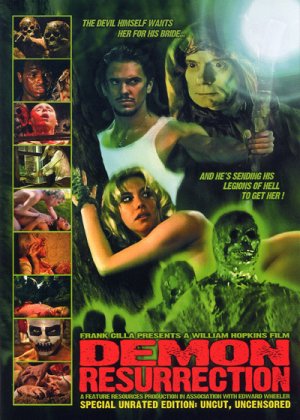
G.O.R.E. Score: Demon Resurrection

Original Release Date: February 18, 2008
Run Time: 87 minutes

I’ve said it before and I’ll say it again – I think I was born in the wrong decade.

I love the gritty, rough-and-tumble feel of a good 1970s film.  I believe that films made in this magical decade were forced to rely more on the power of their story and their actors, rather than be allowed to skate by viewers via the ability of some decent-looking special effects taking the center stage.  I was born in the ‘70s, but obviously wasn’t watching the horror films of the decade as they were released; I cut my teeth on the slasher films and fright flicks of the ‘80s and ‘90s, and as fun as those were, to me there is just something special about the movies that came the decade before.

It should come as no surprise, then, to find out that I also have a special place in my heart for films that emulate the style and feel of the era gone by.  Probably the most recognizable example of this would be Robert Rodriguez and Quentin Tarantino’s Grindhouse double feature, Death Proof and Planet Terror.  Released in 2007, both of these movies were shot in the retro-‘70s style, complete with “scratchy” film, time-appropriate use of wardrobe and dialogue, and even the occasional “missing reel.”  Planet Terror was a zombie film, and was previously reviewed on this site here (included in Vol. 1 of The G.O.R.E. Score book series), but we’re not here to talk about that film; we’re here to talk about another movie featuring the walking dead that seems to pay homage to this era as well: 2008’s Demon Resurrection.

The film opens with a bit of effective back-story exhibition, and quickly jumps right into the thick of things.    Living near a prison burial ground with a fair amount of bloody local lore, Grace has recently become a bit of a recluse, so her friends visit her and stage an “intervention” to try and help.  They assume that Grace is under the influence of drugs given to her by John, her new occultist husband; the group quickly realizes that not only are things not what they seem – John is actually working to protect Grace from a much bigger evil, a local cult leader named Toth – they picked the wrong night to visit, as Toth has set in motion his plans to resurrect an ancient demon, with Grace’s unwilling assistance.  Toth has at his disposal the batch of undead murdered prisoners mentioned at the beginning of the tale, and as you may have guessed, mayhem quickly ensues as the group of unwitting innocents fight to survive their literal night from Hell.

Let’s disco-duck our way into the Score:

G: General Entertainment – The plot of the film, while a tad convoluted at times, is a fun one, and it’s clear the cast and crew were having a good time while creating this movie.  The group of undead prisoners – they are zombies, in the most basic sense – have a really unique look to them, a look that adds to the retro-style feel of the film.  The story is a bit slow to get on its feet, with over 40 minutes of what I’d call “exposition” until the horrific meat of the story finally begins; once the bloody action starts, it grabs you with its undead hands and never lets go. 7/10

O: Original Content – The specifics of the tale are what make Demon Resurrection stand out from the standard zombie/horror fare.  The interesting blend of zombies, occult horror, and good old-fashioned killing of people who never really had a chance to begin with help give the film a one-of-a-kind feel and save it from falling into the usual tricks and traps you’d find in the average horror film.  Credit writer/director William Hopkins and producers Edward Wheeler and Frank Cilla for effectively bringing this tale to life. 7/10

R: Realism – The acting and filming locations are serviceable enough, but it’s some of the finer points of the story that bring our score down here.  Maybe it’s an extension of paying homage to the sometimes-kitschy movies of the 1970s, but pretty much all of the characters in the movie – good guys, bad guys, even the zombies – make flat-out dumb decisions throughout.  The folks trying to survive, as pseudo-survivors often do, make poor choices, like believing a stick can help them fight off the undead, or even worse, moving to stand in front of a window when an attack from the zombies just outside is all-too-eminent.  As the main villain, I’m confused as to why Toth decided to use Grace as a key piece of his grand demonic scheme; she was never overly willing to go along with his ideas, and she seemed very able to thwart the plan when she wanted to.  There may have been something special about her, but if there was I didn’t catch it being explained in the film.  And hey, zombies, there might be a couple of survivors hiding in the barn, but don’t look too closely in the windows of the barn doors, you might see them hiding in plain sight! 5/10

E: Effects and Editing – Gorehounds should be very pleased with this movie, as practical effects are plentiful and pretty darn well done for an independent film.  My qualms here are with the pacing of the film, as noted above, and with the zombies themselves.  While I absolutely loved their unique look – think of a Fulci-esque rotting zombie with hollowed-out eye sockets, rotting teeth, and a decrepit skull-face perched atop some nondescript and tattered clothing – the fact that their faces were made as static masks did detract something from their performance.  When they attacked the living and went to eat them, the undead actors clearly couldn’t bring this part of the scene to life very effectively, since they couldn’t articulate their mouths, so they just ended up staying hunched over their victims as they tossed innards around them.  Also, I really enjoyed the undead’s ethereal, smoking-green glow, but in some scenes I felt that the effect actually detracted from being able to see what the zombies were truly up to. 6/10

TOTAL SCORE: 6.25/10
VERDICT: A’IGHT

When it’s all said and done, Demon Resurrection is an above-average film that combines a unique story with a nostalgic feel of a film-making era long gone by.  A good amount of extras and the promise of the “unrated and uncut” version of the film makes this one to hunt down on DVD, if you consider yourself a fan of the “classic” kind of horror film.

And now, my friends, you know the Score!